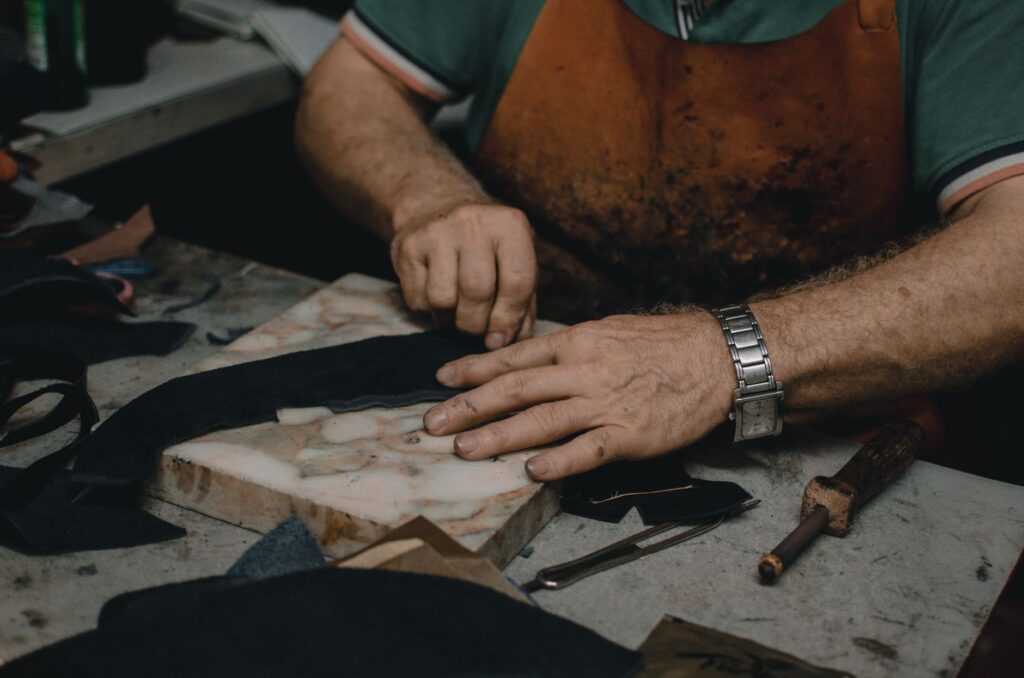
Italy’s leather industry is not a single thing. It is a patchwork of tanneries in Tuscany, workshops in Florence and Milan, family-run ateliers in the Veneto, and large maisons that still route much of their production through Italian factories even after decades of international growth. What ties them together is a set of skills passed down through generations: vegetable tanning, hand-stitching, edge-painting, and a willingness to let a bag or a pair of shoes take weeks rather than hours to finish. Below is a guide to some of the brands worth knowing, and to the details that separate genuine Italian leather craftsmanship from goods that simply borrow the label.


What “Made in Italy” Actually Means for Leather
The phrase is legally regulated in Italy, but it is often misunderstood abroad. For a leather good to be labeled “Made in Italy,” the majority of the manufacturing process — cutting, assembling, finishing — generally needs to happen on Italian soil, even if raw hides are sourced elsewhere. This is different from a brand simply being Italian in name or design origin while manufacturing overseas. Readers looking for the real thing should check labels for the phrase itself, look for a tannery or workshop location when brands disclose it, and be wary of vague terms like “Italian leather” without a manufacturing claim attached, since that can refer only to the material’s origin, not where the bag or shoe was actually built.
Signs of Genuine Craftsmanship
- Vegetable-tanned leather: Common in Tuscan production, this method uses tannins from tree bark and plants rather than chromium salts. It tends to develop a patina over time and smells distinctly earthy rather than chemical.
- Hand-finished edges: Look closely at the edge of a wallet or bag strap. Well-made Italian pieces often have burnished or painted edges, sealed and buffed by hand, rather than raw or simply folded-over edges.
- Full-grain leather: This is the top layer of the hide, including natural imperfections, as opposed to corrected or bonded leather that has been sanded and coated to hide flaws.
- Consistent, tight stitching: Uneven stitch length or loose threads are a giveaway of rushed or low-cost production, even if the leather itself is decent quality.
Established Houses Rooted in Leather
Gucci
Founded in Florence in 1921 by Guccio Gucci, the house began as a maker of leather luggage and equestrian-inspired accessories before growing into one of the most recognized fashion names in the world. Its horsebit loafers and bamboo-handle bags remain reference points for how Florentine leatherwork translated into global luxury. While Gucci is now part of the Kering group and produces far beyond leather goods, its Italian manufacturing base, including workshops in Tuscany, remains central to its identity.
Salvatore Ferragamo
Ferragamo built his reputation as a shoemaker in the early twentieth century, first in the United States and then back in Florence, where he became known for combining comfort engineering with striking design. The company he founded is still headquartered in Florence and continues to produce shoes and leather accessories with a strong emphasis on Italian shoemaking traditions, including hand-lasting techniques.
Bottega Veneta
Founded in Vicenza in 1966, Bottega Veneta is closely associated with intrecciato, the signature woven leather technique that became its visual trademark long before the brand’s logo appeared anywhere on its bags. The idea, reportedly, was that the craftsmanship itself should be recognizable without needing an external logo. The brand remains part of Kering but continues to manufacture leather goods largely within Italy.
Tod’s
Based in the Marche region, Tod’s is best known for its driving shoes with rubber-pebbled soles, a design that grew out of founder Diego Della Valle’s family shoemaking business. The company has stayed relatively concentrated on leather footwear and bags, and much of its production remains rooted in the same region where it started.
Florentine and Artisan-Focused Names
Il Bisonte
Founded in Florence in 1970 by Wanny Di Filippo, Il Bisonte built its identity around raw, vegetable-tanned leather left largely unadorned, allowing the material itself to age and darken with use. Its bags and belts are recognizable for their simplicity rather than elaborate hardware or branding, appealing to buyers who want the leather to be the main statement.
Pratesi
A smaller, family-run Florentine leather goods maker, Pratesi has focused for decades on classic bags, briefcases, and wallets made with vegetable-tanned leather sourced from Tuscan tanneries. Brands like this operate at a different scale than the large fashion houses, often selling through their own boutiques and a smaller network of retailers, with less emphasis on seasonal collections and more on continuity of style.
Anderson’s (Andrea’s Ties and Leather Goods)
Based in Naples, Anderson’s is known particularly for leather belts made using traditional techniques, alongside small leather goods. Neapolitan leatherworking has its own regional character, often associated with softer, more supple hides compared to the firmer vegetable-tanned leather typical of Tuscany.
Shoe-Focused Craftsmanship
Santoni
Founded in the Marche region in 1975, Santoni is known for combining traditional bench-made shoemaking with more experimental finishing techniques, including hand-applied patinas that give each pair a slightly different coloring. The company still operates its own manufacturing facilities in Italy and has been relatively open about showing the handwork behind its shoes.
Berluti
Although Berluti was founded in Paris and is now part of the LVMH group, its shoemaking philosophy draws heavily on Italian and French traditions of hand-patina work and bespoke lasts. It is included here because much of the craftsmanship language associated with the brand — hand-applied color, aged leather finishes — overlaps closely with techniques found in Italian ateliers, and the brand sources from and works with artisans trained in these methods.
Reading Beyond the Label
Brand name alone is not always a reliable guide, since more established houses may manufacture some product lines in different countries while keeping others rooted in Italian workshops. It is worth checking a company’s own materials — many disclose where specific product lines are made, particularly smaller artisan brands that use their manufacturing origin as part of their value proposition. Price is also not a perfect indicator on its own; a high price does not guarantee Italian manufacturing, and a moderately priced item from a smaller regional workshop can be entirely handmade in Italy. The most reliable signals remain the ones described above: the tanning method, the finishing on edges and hardware, and a manufacturer’s willingness to be specific about where and how a piece was made.
Conclusion
Italy’s leather industry spans everything from century-old family workshops to global luxury conglomerates, and the brands worth knowing are not limited to the most recognizable logos. Understanding the difference between vegetable-tanned and chrome-tanned leather, checking for hand-finished details, and paying attention to what a “Made in Italy” label actually claims can help any buyer separate genuine craftsmanship from goods that simply trade on Italy’s reputation.