Japan’s knife-making tradition draws on centuries of sword-forging know-how, later redirected into kitchen tools after swords lost their martial purpose. That lineage shows up today in the steel, the bevel geometry, and the way many workshops still divide labor between a smith who forges the blade and a separate craftsman who handles sharpening and polishing. For a home cook shopping for made in Japan kitchen knives, the range runs from mass-produced factory lines in Seki City to small ateliers where a single artisan finishes each blade by hand. Knowing which category a brand falls into makes it much easier to pick something that fits both a budget and a skill level.
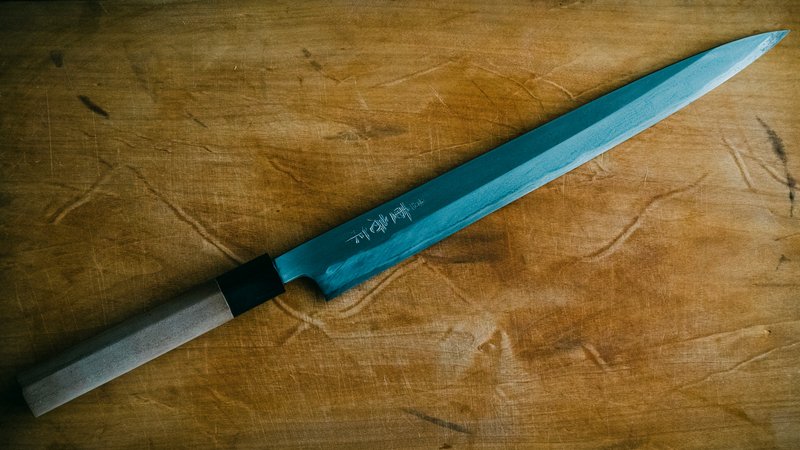

What Sets Japanese Kitchen Knives Apart
Most Japanese blades are ground thinner than their German or French counterparts and often sharpened to a steeper edge angle, which is why they tend to cut with less resistance through vegetables, fish, and boneless proteins. Many use high-carbon steels — including proprietary blends like VG-10, SG2/R2 powder steel, or traditional white and blue carbon steel (shirogami and aogami) — that hold an edge longer than typical Western stainless alloys but can be more brittle and less forgiving of twisting cuts or bone contact.
Handle styles also differ. Japanese knives frequently come with a wa-handle, a lightweight octagonal or oval wooden grip fitted without bolsters, though many brands also offer Western-style handles for cooks who prefer that balance and durability. Neither is objectively better; it’s a matter of grip preference and how much upkeep a buyer wants to take on, since carbon steel blades require drying after use to avoid rust.
Full Tang Versus Partial Tang Construction
Western-style Japanese knives usually run a full tang through a riveted handle, similar to German construction. Traditional wa-handled knives more often use a partial tang inserted into the wood and held by friction, which keeps weight forward and the knife lighter overall but means the handle can eventually loosen and need reseating by a sharpening professional.
Established Brands Worth Knowing
Shun
Shun is produced by Kai Corporation, a company headquartered in Seki City with a history stretching back to the late 1800s in blade and cutlery manufacturing. Shun knives are widely available in Western kitchen retailers and use VG-MAX or SG2 core steel clad in layers of softer stainless for a Damascus-like pattern. They come with Western-style handles as standard, which makes them a comfortable entry point for cooks used to German knives who want to try Japanese steel and geometry without changing their grip habits.
Global
Global, made by Yoshikin in Niigata Prefecture, took a different design path in the 1980s by molding the handle and blade from a single piece of stainless steel, dispensing with the wood-and-tang model entirely. The result is a knife that’s easy to keep sanitary and rebalanced toward the handle, which some cooks find less fatiguing over long prep sessions. Global’s steel is softer than the premium powder steels used elsewhere, so the edge needs more frequent touch-ups, but the knives are notably light and the stainless composition tolerates a less careful drying routine than carbon steel.
Miyabi
Miyabi, also under the Zwilling J.A. Henckels umbrella, is made in Seki City and leans further into traditional aesthetics — hammered finishes, Damascus cladding, and Western or wa-handle options depending on the line. Miyabi’s higher-end series use SG2 powder steel and are pitched at cooks who want the look and edge retention of a premium Japanese blade but still want the option of a factory warranty and wide retail availability.
Masamoto
Masamoto is a Tokyo-based maker with roots going back to the 19th century, known particularly for traditional single-bevel blades used in professional sushi and sashimi preparation, such as the yanagiba. This is a brand aimed squarely at cooks who already understand single-bevel sharpening and want a knife built for a specific technique rather than an all-purpose tool.
Tojiro
Tojiro, based in Niigata’s Sanjo-Tsubame region — an area with its own long metalworking history distinct from Seki — has built a reputation for offering genuine VG-10 core construction at prices well below many competitors. The finishing work is less refined than on hand-polished artisan blades, but the steel performance is respectable, which makes Tojiro a frequent recommendation for someone testing whether they actually prefer a Japanese-style blade before spending more.
Misono
Misono, another Seki-based maker, sits a step up in price and is popular among working chefs for its balance and edge geometry, particularly in its carbon steel and UX10 stainless lines. It doesn’t have the retail visibility of Shun or Global, but it shows up often in professional kitchens where cooks source knives through specialty importers rather than department stores.
Smaller and Artisan Workshops
Beyond the brands with wide export distribution, Japan has many smaller forges where blades are still made largely by hand, often selling primarily through specialty knife shops or direct order rather than mainstream retail. Names like Yoshihiro, Sakai Takayuki, and various independent smiths working in Sakai City — a center of Japanese blade-making distinct from Seki — fall into this category. These knives are frequently single-bevel, carbon steel, and intended for cooks with the sharpening skill and maintenance discipline to keep them performing well. They reward experience rather than convenience.
Matching a Brand to the Cook
For Beginners
Cooks new to Japanese knives generally do better starting with a Western-handled, stainless-steel option like Shun, Miyabi’s entry lines, Global, or Tojiro. These brands don’t require carbon steel maintenance, ship with familiar handle geometry, and are sold with warranty support through mainstream retailers, which matters if a first knife needs servicing or replacement.
For Cooks Ready to Commit
Someone who already knows they like thin, hard-edged blades and is willing to hand-wash and dry carbon steel promptly might get more long-term satisfaction from Misono’s carbon lines, a Sakai-forged blade, or a Masamoto if their cooking involves precise fish work. These knives ask more of the owner but reward that effort with sharper, longer-lasting edges.
Considering Price Point
- Entry level: Tojiro and base Global lines typically offer the most steel quality per dollar for a first purchase.
- Mid-range: Shun and Miyabi occupy a middle tier where retail convenience, warranty, and Damascus aesthetics come bundled with good but not top-tier steel.
- Professional and artisan tier: Misono, Masamoto, and small Sakai or independent forges cater to cooks who want powder steel, custom fitting, or single-bevel specialization, usually at a price and maintenance commitment to match.
Conclusion
There’s no single best brand among made in Japan kitchen knives — only a best fit for a given cook’s habits, budget, and willingness to maintain a blade properly. Someone replacing a dull Western chef’s knife will likely be happiest with a Western-handled stainless option from Shun, Miyabi, or Global, while a cook already comfortable with sharpening stones and single-bevel technique has much more to gain by looking toward Misono, Masamoto, or one of the smaller Sakai forges. Understanding where a brand sits — factory-scale production in Seki or Niigata versus small-batch artisan work in Sakai — is usually the fastest way to set realistic expectations before buying.